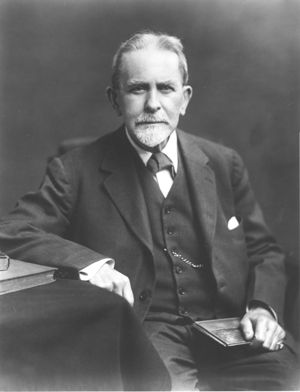
Sir James George Frazer was a Scottish social anthropologist influential in the early stages of the modern studies of mythology and comparative religion.
|
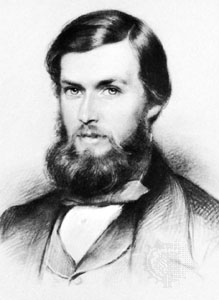
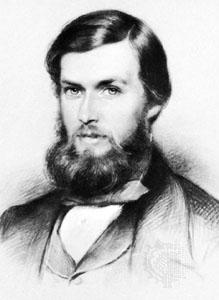
Sir Edward Burnett Tylor was an English anthropologist, the founder of cultural anthropology. Tylor is representative of cultural evolutionism.
|
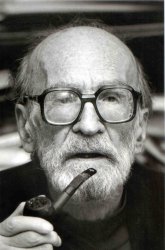
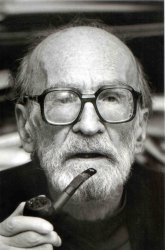
Mircea Eliade was a Romanian historian of religion, fiction writer, philosopher, and professor at the University of Chicago.
|
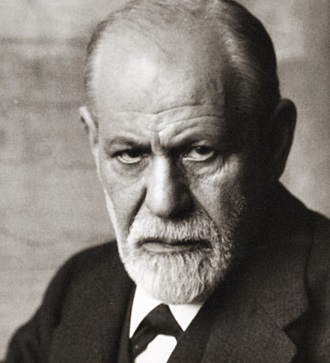
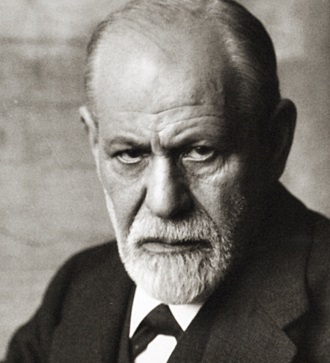
Sigmund Freud was an Austrian neurologist and the founder of psychoanalysis, a clinical method for treating psychopathology through dialogue between a patient and a psychoanalyst.
|
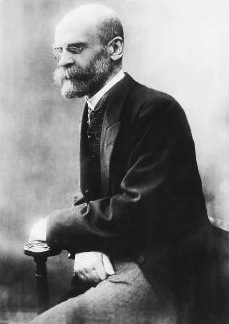
David Émile Durkheim was a French sociologist, social psychologist and philosopher.
|
Theories Explaining Religion
RELIGION AS MAGIC
J. G. Frazer (1854-1941) said that the first religious actions were concerned with survival. Hunters needed plentiful and healthy animals to hunt, and farmers needed the sun and the rain for the growth of their crops. When the things they needed didn't appear - the rain did not come, a disease struck down healthy animals, the crops did not grow - the ancient people developed rituals which they believed would bring the outcome they wanted. They would perform a ritual to imitate what they hoped would happen. For example, dressing a child in leaves and taking him from house to house where he would be sprinkled with water (a ritual practiced in some villages in India), imitated what the people hoped and expected would happen because they performed the ritual, that is, that rain will come and crops will grow.
RELIGION AS ANIMISM
The anthropologist E. B. Tylor (1832-1917) advanced the idea of animism, that is, the belief that each person and natural object is animated by its own soul or spirit. He defined religion as "belief in spiritual beings", because he argued that the one characteristic that all religions share is a belief in spirits who have human characteristics, that is, they act, think, and feel like humans. His explanation of the origin of religion and the first phase of its development, goes like this. From the earliest moments of human consciousness people would have observed their world and used their minds to try to explain it. In the first place, Tylor says, people would have seen the difference between a living body and a dead one, and thought about what made the difference. What animates a living body and what causes it to die? In the second instance, they would have been aware of the human shapes that appeared in their dreams. From this, the ancient people probably decided that every person has two things: first, life itself: and second the phantom beings that appear in dreams as the shadow or second self. This led to the belief that every person is animated by a soul or inner spirit. From this it was a simple step to believing that the rest of the natural world - every tree, rock, water hole, animal, star, indeed every natural feature - also has its own spirit.
J. G. Frazer (1854-1941) said that the first religious actions were concerned with survival. Hunters needed plentiful and healthy animals to hunt, and farmers needed the sun and the rain for the growth of their crops. When the things they needed didn't appear - the rain did not come, a disease struck down healthy animals, the crops did not grow - the ancient people developed rituals which they believed would bring the outcome they wanted. They would perform a ritual to imitate what they hoped would happen. For example, dressing a child in leaves and taking him from house to house where he would be sprinkled with water (a ritual practiced in some villages in India), imitated what the people hoped and expected would happen because they performed the ritual, that is, that rain will come and crops will grow.
RELIGION AS ANIMISM
The anthropologist E. B. Tylor (1832-1917) advanced the idea of animism, that is, the belief that each person and natural object is animated by its own soul or spirit. He defined religion as "belief in spiritual beings", because he argued that the one characteristic that all religions share is a belief in spirits who have human characteristics, that is, they act, think, and feel like humans. His explanation of the origin of religion and the first phase of its development, goes like this. From the earliest moments of human consciousness people would have observed their world and used their minds to try to explain it. In the first place, Tylor says, people would have seen the difference between a living body and a dead one, and thought about what made the difference. What animates a living body and what causes it to die? In the second instance, they would have been aware of the human shapes that appeared in their dreams. From this, the ancient people probably decided that every person has two things: first, life itself: and second the phantom beings that appear in dreams as the shadow or second self. This led to the belief that every person is animated by a soul or inner spirit. From this it was a simple step to believing that the rest of the natural world - every tree, rock, water hole, animal, star, indeed every natural feature - also has its own spirit.
RELIGION AS THE SACRED
Mircea Eliade (1907-1986), a Romanian historian of religion, argued that religious thought rests on a distinction between the Sacred and the Profane. The Profane is the realm of the everyday, of ordinary business, and it is quite unimportant in relation to the Sacred. The Sacred is the sphere of the supernatural, the sphere of ancestors, gods and heroes. The concern of religion is with the supernatural, in and of itself, and not just for its social function. In an encounter with the Sacred, Eliade said, people feel in touch with something not of this world, a dimension of existence that is powerful and real. However the Sacred is conceived (as one God, many Gods or in another way), the role of religion is to help people to come into contact with it, through bringing them out of the realm of the Profane and everyday into the realm of the supernatural. Intuition of the Sacred is a permanent feature of human experience, Eliade claimed, and it has the power to bring clarity and meaning to individual and communal existence.
Mircea Eliade (1907-1986), a Romanian historian of religion, argued that religious thought rests on a distinction between the Sacred and the Profane. The Profane is the realm of the everyday, of ordinary business, and it is quite unimportant in relation to the Sacred. The Sacred is the sphere of the supernatural, the sphere of ancestors, gods and heroes. The concern of religion is with the supernatural, in and of itself, and not just for its social function. In an encounter with the Sacred, Eliade said, people feel in touch with something not of this world, a dimension of existence that is powerful and real. However the Sacred is conceived (as one God, many Gods or in another way), the role of religion is to help people to come into contact with it, through bringing them out of the realm of the Profane and everyday into the realm of the supernatural. Intuition of the Sacred is a permanent feature of human experience, Eliade claimed, and it has the power to bring clarity and meaning to individual and communal existence.
RELIGION AS NEUROSIS
Sigmund Freud (1856-1939), claims that religion arises out of emotional conflict and weakness. It is a product of personality disturbance and is the result of psychological stress. Religion is a disorder in the psyche of the human person and can be cured by psychoanalysis. That is, religion is a neurosis, a psychological problem.
Freud regarded God as an illusion, based on the infantile need for a powerful father figure. He believed that religion, which was necessary to help us restrain violent impulses earlier in the development of civilization, can now be set aside in favor of reason and science.
RELIGION AS SOCIAL
Emile Durkheim (1858-1917) a French philosopher, taught that religion has a very important social function. His theory was that even though individuals make choices, they make them within a social context consisting of family, language, society, culture, customs and values. These things shape their identity so profoundly, they simply take them for granted. Durkheim argued that in all cultures, religion is part of this social landscape; indeed, it is the most important part. From infancy on, it provides the person with the ideas, rituals, beliefs, rules and values that guide the society and the people within it.

Exercises
- Define the following terms: ritual; animism, magic, sacred, profane, neurosis, psychoanalysis
- Write a 100 word summary of the 5 approaches to religion.
- Which one of the approaches seems to describe religion best? Explain (25 words)
- Which of the theories seems least helpful? Explain (25 words)